Source CE Certified Solid State Softstarter for Motors, Pumps, Fans
Find 30 CE certified solid state softstarter options for industrial motor control. Compare specifications including voltage, power range, and control features from verified Chinese manufacturers to select the right unit for your application.
Key considerations
Products List

Modbus Profibus Communication Interface Medium Voltage Solid State Soft Starters
$10000.00 - $99999.00
Moq: 1

CE & ISO Certified Triple-Function Medium Soft Starter From Our Own Factory
$15000.00 - $49999.00
Moq: 1

Own Designed Solid-State Soft Starter for Smooth Motor Start in Petrochemical Industry
$10000.00 - $99999.00
Moq: 1


Protect Your Equipment with Advanced Solid-State Soft Starter for Water Treatment Systems
$15000.00 - $49999.00
Moq: 1


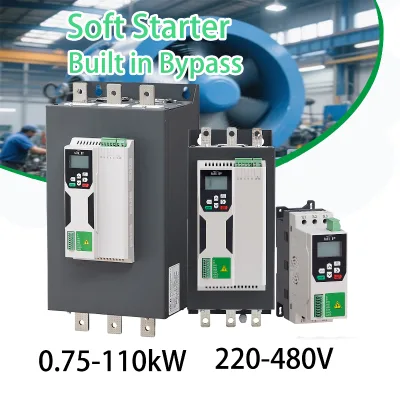


Comprehensive Sourcing Guide
ce certified solid state softstarter Sourcing Guide
The global market for solid-state soft starters has evolved to prioritize precise motor control and energy efficiency, with a specific focus on units that carry recognized safety certifications. Based on observed listings, buyers can identify products ranging from compact 7.5kW models to heavy-duty industrial units exceeding 10,000kW, often featuring discrete signal processing and closed-loop structures. These devices are primarily designed for the application of motor soft starting, utilizing slip frequency control transducers to manage the acceleration of three-phase asynchronous motors without the mechanical stress associated with direct-on-line starting.
Procurement strategies must account for the significant variance in power ratings and voltage requirements found in current catalogs. While some units operate on standard 380V AC supplies with a tolerance of +/-15%, others are engineered for high-voltage environments ranging from 2kV to 15kV AC, necessitating careful matching of the supply voltage to the specific motor load. The observed product range includes models with automatic control functions and protection features, available in both vertical and manual installation configurations, which dictates the physical layout and integration requirements of the final industrial system.
Product Scope and Observed Listing Signals
Buyers should first distinguish between the various product models and their specific functional attributes to ensure alignment with operational needs. The market currently features distinct model series such as the AOKO-H, AOKO-S, and specific variants like the AOKO-H-318 or AOKO-7-BP-328, each potentially tailored for different power bands and control logic. Observations indicate that while some units are marketed with "Automatic Grade" labels, others explicitly list "Manual" installation or operation, requiring the procurement team to verify the actual automation level required for the intended process control environment.
Material composition and physical construction are critical signals for durability and environmental resistance in industrial settings. Most observed units are constructed from stainless steel, offering robust protection against corrosion and physical shock, which is essential for harsh manufacturing environments. The packaging is frequently listed as wooden cases or boxes, suggesting a need for specialized logistics planning to prevent damage during transit, while the color specifications, such as white with blue, serve as visual identifiers for specific product lines or manufacturer branding.
Technical Specifications to Verify
Voltage compatibility and power range are the primary technical parameters that must be validated before finalizing a purchase order. The observed data reveals a wide spectrum of capabilities, with some units supporting a nominal value of 1kV to 10kV and others designed for 2kV to 11kV AC, while specific soft starter models are rated for 230V applications. Buyers must cross-reference the input voltage requirements, such as the 380V +/-15% tolerance, against their facility's power infrastructure to avoid incompatibility issues that could lead to equipment failure or inefficient operation.
Control architecture and motor adaptation capabilities define the operational flexibility of the soft starter. The available units often support a broad range of control voltages, including 110V, 220V, 380V, 440V, 480V, 660V, and 690V, allowing for customization to match existing control panels. Furthermore, the devices are engineered specifically for three-phase asynchronous motors, utilizing discrete signals and non-linear mathematical models to execute the soft start sequence. Verification of the current rating, which can range from 60A to 2500A, is essential to ensure the unit can handle the peak inrush currents of the connected motor without tripping or sustaining damage.
Compliance and Safety Documentation
Certification status is a non-negotiable aspect of procurement for industrial electrical equipment, particularly when operating in regulated markets. The observed listings frequently cite CCC (China Compulsory Certification) and ISO standards, with some entries also mentioning CE certification, which is critical for access to European markets and compliance with international safety directives. Buyers must request and verify the specific certificate documents for each batch, ensuring that the certification applies to the exact model number and power rating being purchased, rather than relying on general manufacturer claims.
Safety standards and protection mechanisms must be explicitly documented to mitigate operational risks. Products are often described with specific protection features such as shock resistance and housing types like UPR, which indicate the level of ingress protection against dust and moisture. While background knowledge suggests adherence to standards like IEC 60947-4-2, buyers should insist on seeing the actual test reports or compliance statements that link the specific product attributes to these standards, ensuring that the equipment meets the rigorous safety requirements for high-voltage and high-power applications.
Cost Drivers and Commercial Terms
The pricing structure for solid-state soft starters is heavily influenced by power capacity, voltage rating, and the complexity of the control system. The observed market shows a vast price range, from approximately $10 for smaller components to nearly $100,000 for high-power industrial units, reflecting the significant difference in material costs and engineering complexity between a 7.5kW unit and a 10,000kW system. Buyers should anticipate that higher voltage ratings, such as those exceeding 10kV, and custom control voltage options will command a premium, necessitating a detailed cost-benefit analysis based on the specific operational requirements.
Minimum Order Quantities (MOQ) and packaging requirements are key commercial terms that affect the total cost of ownership and logistics planning. Current observations indicate a consistent MOQ of 1 unit across the listed products, offering flexibility for pilot projects or single-unit replacements. However, the requirement for wooden case or box packaging adds to the shipping weight and volume, which can impact freight costs. Procurement teams should negotiate terms that account for these packaging specifics and verify if bulk purchasing offers any reduction in unit price or shipping fees.
Supplier Qualification and Quality Control
Supplier verification must extend beyond basic product listings to include an assessment of their manufacturing capabilities and quality assurance processes. The observed products originate from China, and buyers should evaluate the supplier's track record in producing units with the specific certifications mentioned, such as CCC and ISO. It is crucial to confirm that the supplier maintains consistent quality control measures, particularly for the stainless steel construction and the precise calibration of the slip frequency control transducers, which are central to the device's performance.
Quality control protocols should include pre-shipment inspections and validation of the product's physical and electrical attributes. Buyers should request evidence that the "New" condition of the products is maintained through proper storage and handling, and that the "Customized" options are executed with precision. Given the wide range of power ratings and voltage specifications, a robust quality control process must verify that each unit meets its specific nominal values and current ratings before leaving the factory, ensuring that the delivered equipment matches the technical specifications agreed upon in the purchase order.
Long-Term Procurement Checks
Sustainability and lifecycle management are critical considerations for high-power electrical equipment that operates continuously in industrial environments. Buyers should establish a long-term relationship with suppliers who can provide consistent support for maintenance, spare parts, and potential firmware updates for the control systems. The availability of customization options suggests that the supplier should be capable of adapting the product to future operational changes, ensuring that the investment remains viable as the facility's motor requirements evolve over time.
Performance monitoring and periodic re-verification of compliance are necessary to maintain operational safety and efficiency. As the equipment ages, buyers should implement a schedule to check the integrity of the shock resistance features and the stability of the voltage regulation capabilities. Regular audits of the supplier's certification status and the product's adherence to standards like IEC 60947-4-2 will help prevent regulatory non-compliance and ensure that the soft starters continue to operate safely and effectively throughout their intended service life.
FAQs
What certifications do these soft starters have?
These solid state soft starters are certified with CCC and ISO standards. The product attributes also indicate CE compliance for broader market acceptance. These certifications ensure the equipment meets essential safety and quality requirements for industrial applications. Buyers should verify specific documentation for their local regulatory needs before deployment.
Can the soft starter be customized for specific needs?
Yes, customization is available for these units. The product attributes explicitly state that customized options are offered to meet unique operational requirements. This allows buyers to tailor the soft starter to specific motor parameters or control logic. Customization ensures the device integrates seamlessly into existing industrial infrastructure without compatibility issues.
What is the voltage range for these devices?
The voltage range varies by model, typically spanning from 2-11kV AC to 2-15kV AC. Some specific models support 380V AC input with a tolerance of +/-15%. This wide range allows the soft starters to handle various power supply conditions. Buyers must select the appropriate model based on their specific motor voltage requirements.
How is the soft starter installed?
Installation can be vertical or manual depending on the specific model. The product attributes list both vertical installation and manual operation as available configurations. This flexibility allows for adaptation to different panel layouts or operational workflows. Proper installation ensures optimal performance and safety in industrial environments.
What is the power range of these soft starters?
The power range spans from 7.5kW to 10,000kW across different models. Specific models cover ranges like 400-3000kW or 200-1000kW. This extensive range supports applications from small motors to large industrial machinery. Buyers should match the motor power to the appropriate soft starter capacity for efficient operation.
What material is used for the housing?
The housing is constructed from stainless steel, providing durability and resistance to environmental factors. Some models also feature UPR housing for additional protection. This material choice ensures longevity in harsh industrial conditions. The robust construction helps protect internal components from shock and other physical stresses.